In this guide
Home VR headsets have come a long way. If you own one, you might wonder why anyone would pay to play VR somewhere else.
It's a fair question. The honest answer: home VR and venue VR are good at different things. Here's the breakdown.
What home VR does well
Let's give home VR its credit.
- Huge game libraries. Hundreds of titles, from puzzle games to fitness apps.
- Play anytime. No booking, no drive, no waiver.
- Great for solo play. Long single-player games are where home VR shines.
- Low cost per hour. Once you own the headset, extra play time is free.
If you mostly want to play alone, on your own schedule, home VR is the right tool.
Where home VR hits its limits
Space
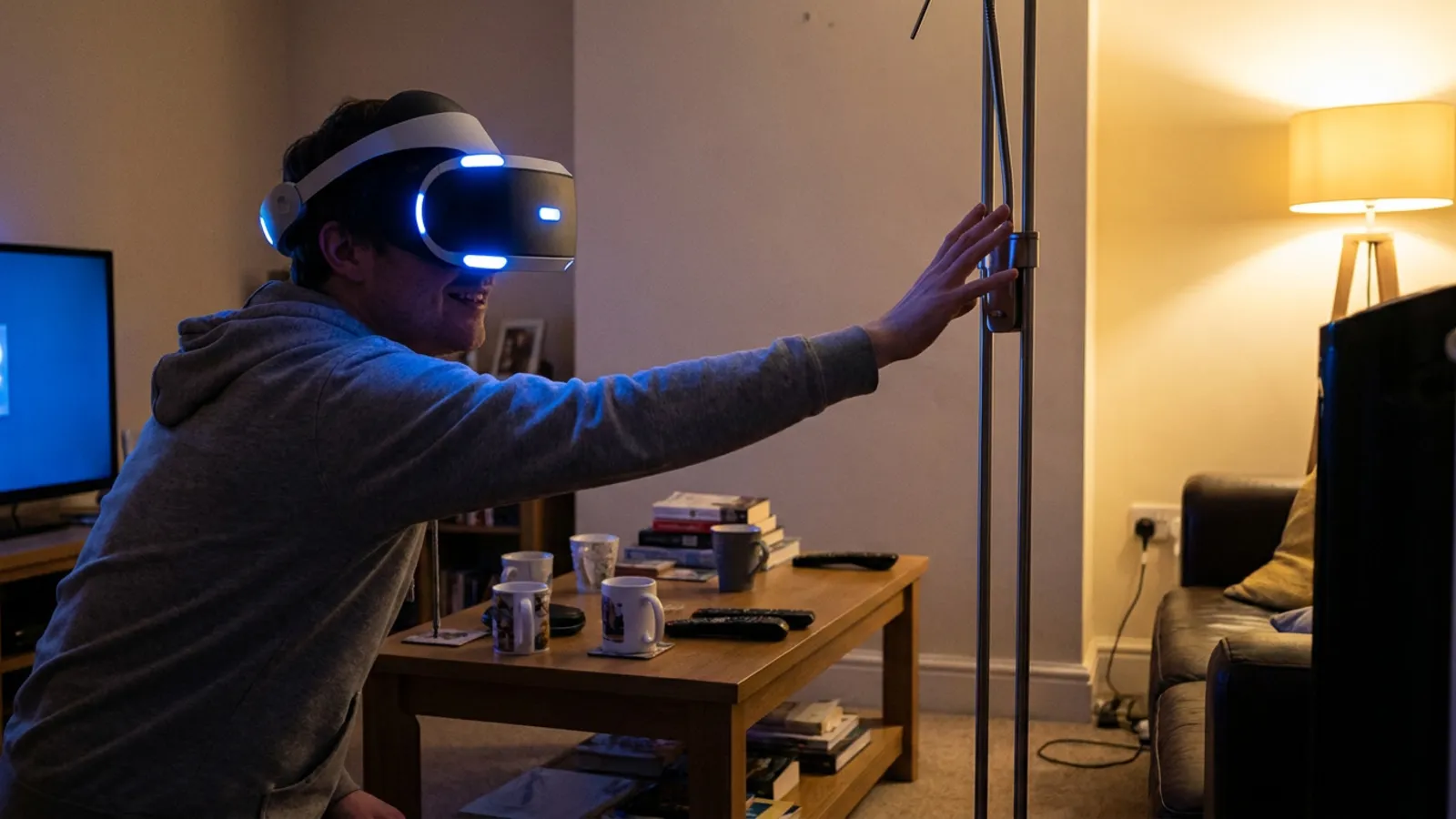
Most living rooms give you a few square metres before the guardian boundary pops up. You turn with a thumbstick, not your body. That's the main reason some people feel queasy at home: their eyes see movement their body never makes.
Playing together
Multiplayer at home usually means friends in different houses, each in their own room. You hear them, but you don't share the space. The high-five after a win doesn't land the same way.
Physical motion
A headset can show you a race car or a spaceship, but your couch stays still.
What a free-roam arena adds
Walk, crouch and dodge for real
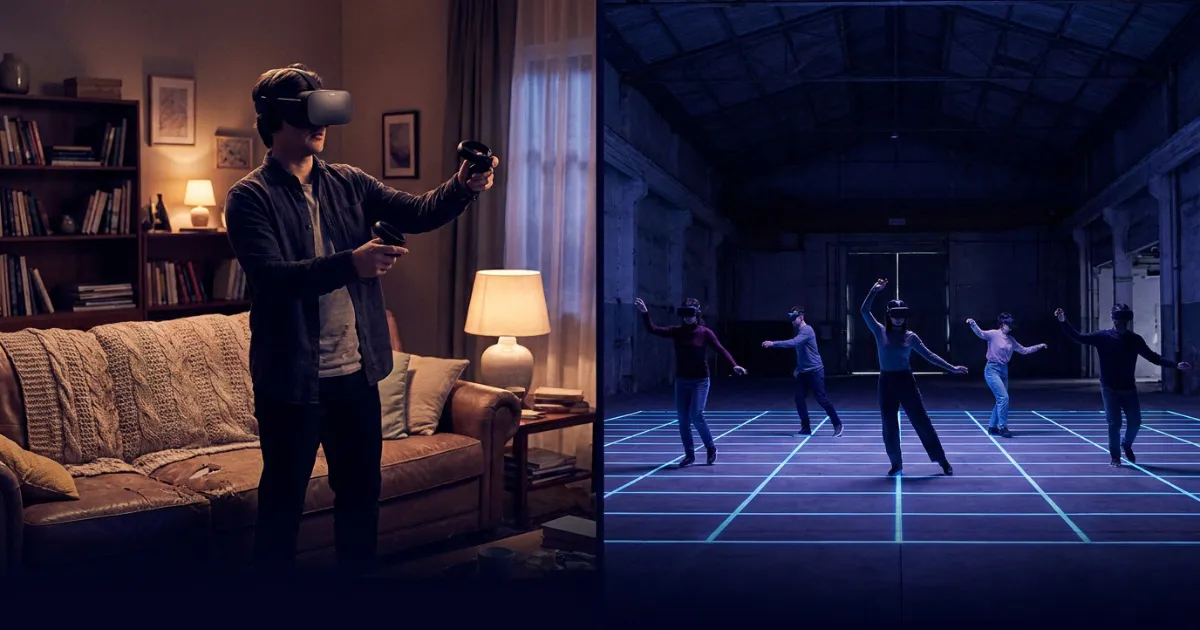
In a free-roam arena you move through a large tracked space with a wireless headset. Walking ten steps forward in the room moves you ten steps forward in the game. Your body and the game agree, which feels more natural and is a big reason free-roam VR feels so immersive.
At Elyonexus, our VR Arena uses full-body tracking with no wires and no controllers. Your body is the controller. Curious how that works? We break it down in Inside the Arena: How Free-Roam VR Technology Works.
Your squad, in the same room
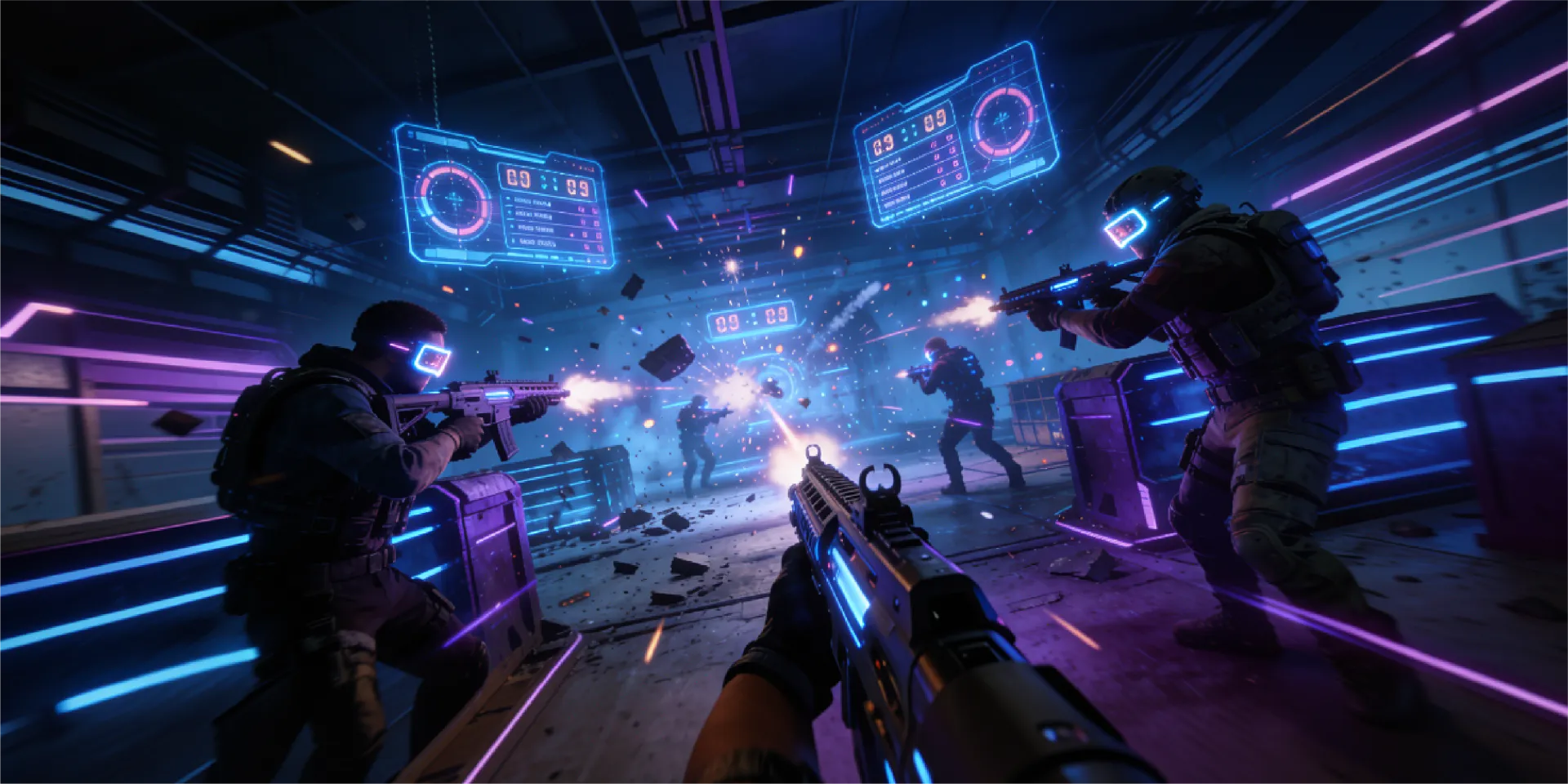
Up to six players share the arena at once. You can hear your friends, call out positions and coordinate as a team. It's the closest thing to stepping into a video game together.
Rides that move you
This is something home VR simply can't do. Our motion rides physically move you in sync with what you see:
- VR Flash Racer: a racing simulator with force feedback, real steering, pedals and gear shifting, in two side-by-side units for head-to-head races
- VR Magic UFO: a motion platform for up to five riders that spins, drops and launches
- VR Mecha: a full mech cockpit you pilot yourself
Read more in What Is a VR Motion Ride?
Staff who handle everything
No updates, no charging, no setup. Our team fits your gear, briefs your group and monitors every session.
Side by side
| Home VR | Free-roam arena | |
|---|---|---|
| Play space | Living room | Large tracked arena |
| Movement | Thumbstick or room-scale | Walk freely, full body |
| Multiplayer | Online, separate rooms | Same room, same game |
| Physical motion | None | Motion rides |
| Best for | Solo play, long games | Groups, events, big moments |
So which is better?
Neither. They're different experiences, the same way a home TV doesn't replace going to the cinema. Home VR is your everyday console. A VR arena is the night out.
If you own a headset, you're probably the perfect guest: you already love VR, and you'll feel the difference the moment you take your first step in a full arena.
Join the Fleet for first access to arena sessions.
Frequently asked questions
What is free-roam VR?
Free-roam VR lets you walk around a large physical space while wearing a wireless headset. The game tracks where you are, so walking in the room moves you in the virtual world.
Is a VR arena worth it if I already have a headset?
Yes, if you want things home VR can't do: walking freely in a large space, playing in the same room as your friends, and motion rides that physically move you.
How many people can play together in the Elyonexus VR Arena?
Up to six players per session in the free-roam VR Arena.